Why this method is necessary
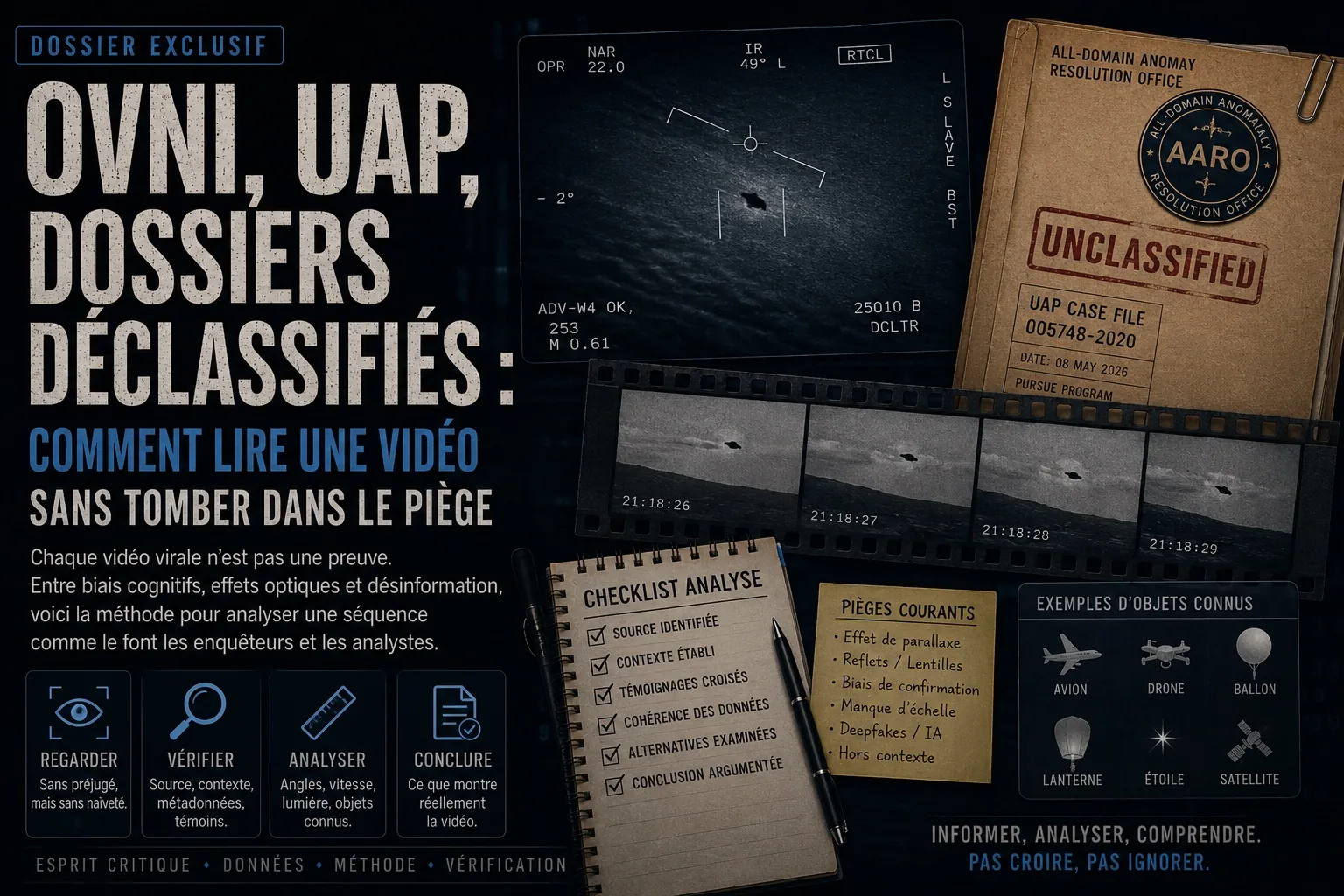
The UFO/UAP topic suffers from a structural problem: it simultaneously attracts serious official documents and a massive amount of unverified, fabricated, or misattributed content. On social networks, the two coexist without clear distinction. Result: the credibility of real documents is polluted by association with questionable content.
This five-point method allows you to quickly assess whether a document merits serious analysis or can be discarded.
Provenance: who published, when, where
The first question is simple: where does this document come from?
- Direct official source : the document can be downloaded from a government site (.mil, .gov, or the foreign equivalent). This is the highest level of credibility.
- Secondary official confirmation : the document was cited or authenticated by an official spokesperson (e.g. Sue Gough for the Pentagon in 2020). Credibility remains high.
- Recognized journalistic source : the document was published by a media with strong editorial requirements (New York Times, Reuters, AP, CBS) with a documented chain of sources. Medium to high credibility depending on the level of verification described.
- Social media only : no verifiable provenance, no identifiable author. Very low credibility — treat as not established until independent confirmation.
✓ Examples of solid provenance
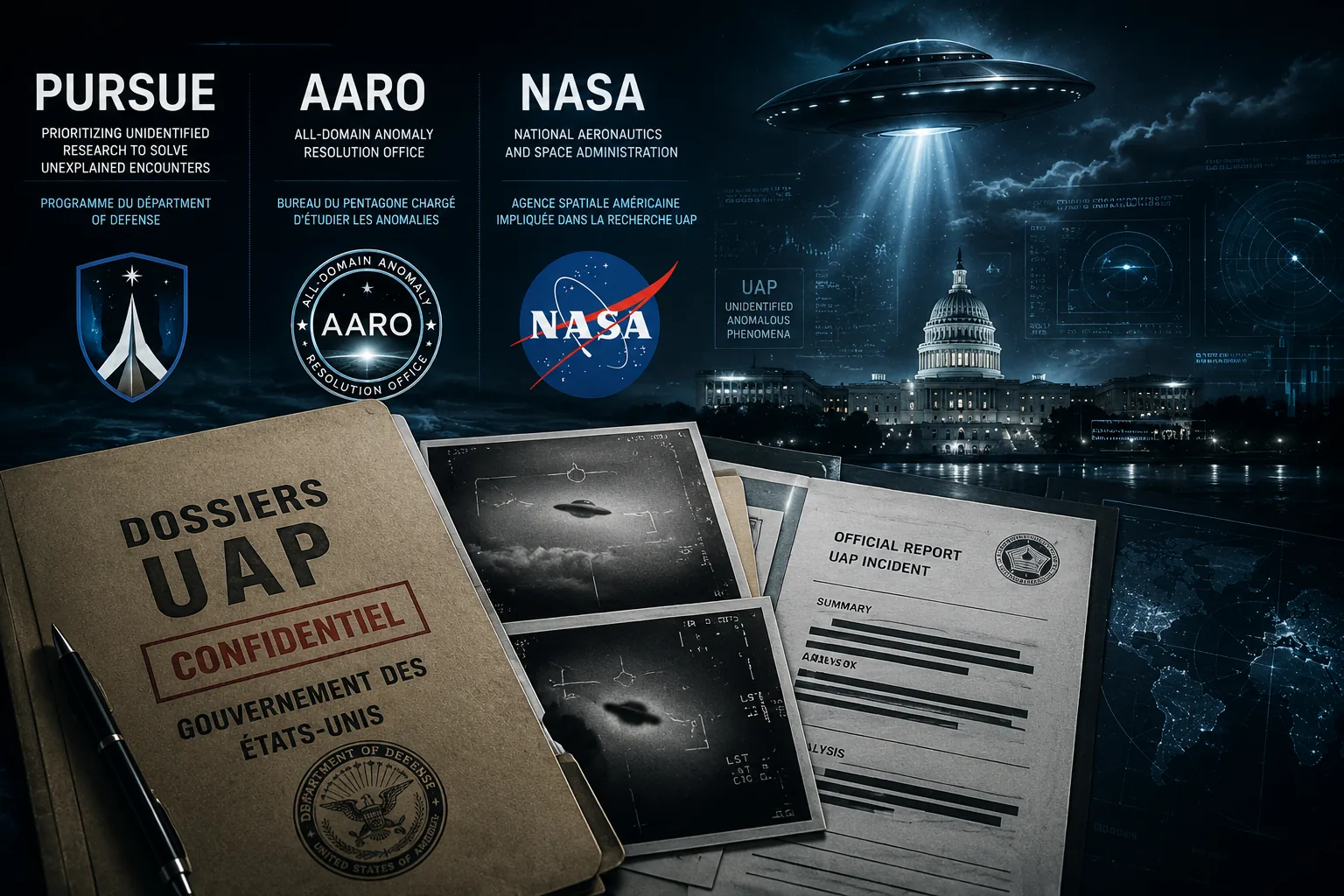
- FLIR1, Gimbal, GoFast videos — downloadable from defense.gov since April 2020
- AARO FY2022, FY2023, FY2024 reports — available at aaro.mil
- PURSUE files — WAR.GOV/UFO since May 2026
The sensor: what films, under what conditions
Understanding the sensor is essential to correctly interpreting UAP video. Each technology has its limitations and specific visual artifacts.
- ATFLIR / FLIR (thermal infrared): senses temperature differences. A “shiny” object in FLIR is warm, not luminous. The image rotation seen in the Gimbal video is a known artifact of ATFLIR systems in Lock mode.
- Radar (AN/SPY-1B, AESA): detects objects by reflection of radio waves. Sensitive to electromagnetic lures and atmospheric phenomena. Radar traces must be correlated with other sensors to be meaningful.
- Optical camera : limited by weather conditions, resolution, zoom. A blurry object on consumer video says nothing about its nature.
The golden rule: a single sensory source is not enough. The most documented cases (Nimitz 2004) combine multi-sensor radar, independent visual observation of several witnesses, and infrared recording.
The chain of custody: who saw, who signed, who validated
A credible military document has a traceable chain of custody : pilot → squadron commander → chain of command → archiving. Leaks without a documented chain of custody are systematically less reliable — not because they are fake, but because they cannot be verified.
Questions to ask when faced with a document:
- Who wrote this report? Is this an identifiable person?
- Was it signed, classified, archived according to normal procedures?
- Are there other independent witnesses who corroborate the same facts?
- Has the original institution confirmed or denied authenticity?
Signals that should make you cautious
⚠ Frequent warning signals
- Total anonymity : “a highly placed source” without name, rank or organization cited.
- Lack of timestamps or verifiable metadata : a video without date, without location, without identified sensor.
- Dissemination via a single non-institutional channel : YouTube, TikTok, unknown Twitter account — without coverage in the serious press.
- Immediate overinterpretation : If the author of the content states upfront "this is proof of aliens", this is a signal that the content is rhetorical rather than documentary.
- Resemblance to science fiction elements : real UAP documents are austere, technical, often vague. They don't look like movie scenes.
The UFO VIDEO grid
VIDEO OVNI systematically applies this reading grid to each document processed:
- ✓ Identifiable source : government agency, recognized media, academic institution.
- ✓ Documented sensor : we know what was filmed and what its limits are.
- ✓ Independent corroboration : at least two distinct sources confirm the same facts.
- ✓ Explicit distinction : fact / statement / hypothesis / not established.
- ✗ No claim of origin without a solid public document.
Sources used
- AARO — aaro.mil — Annual reports FY2022, FY2023, FY2024: methodology for classifying reports.
- Pentagon – Sue Gough statement — April 27, 2020: official authentication of the three videos FLIR1, Gimbal, GoFast.
- NASA Independent Study Team — September 14, 2023: recommendations on the quality of UAP data and the rigor of analysis.
- New York Times — December 16, 2017: Helene Cooper, Ralph Blumenthal, Leslie Kean. Reference model for sourced UAP journalism.
- David Fravor Testimony — US Congress, July 26, 2023: description of the conditions of the 2004 Nimitz incident, including the sensors involved.