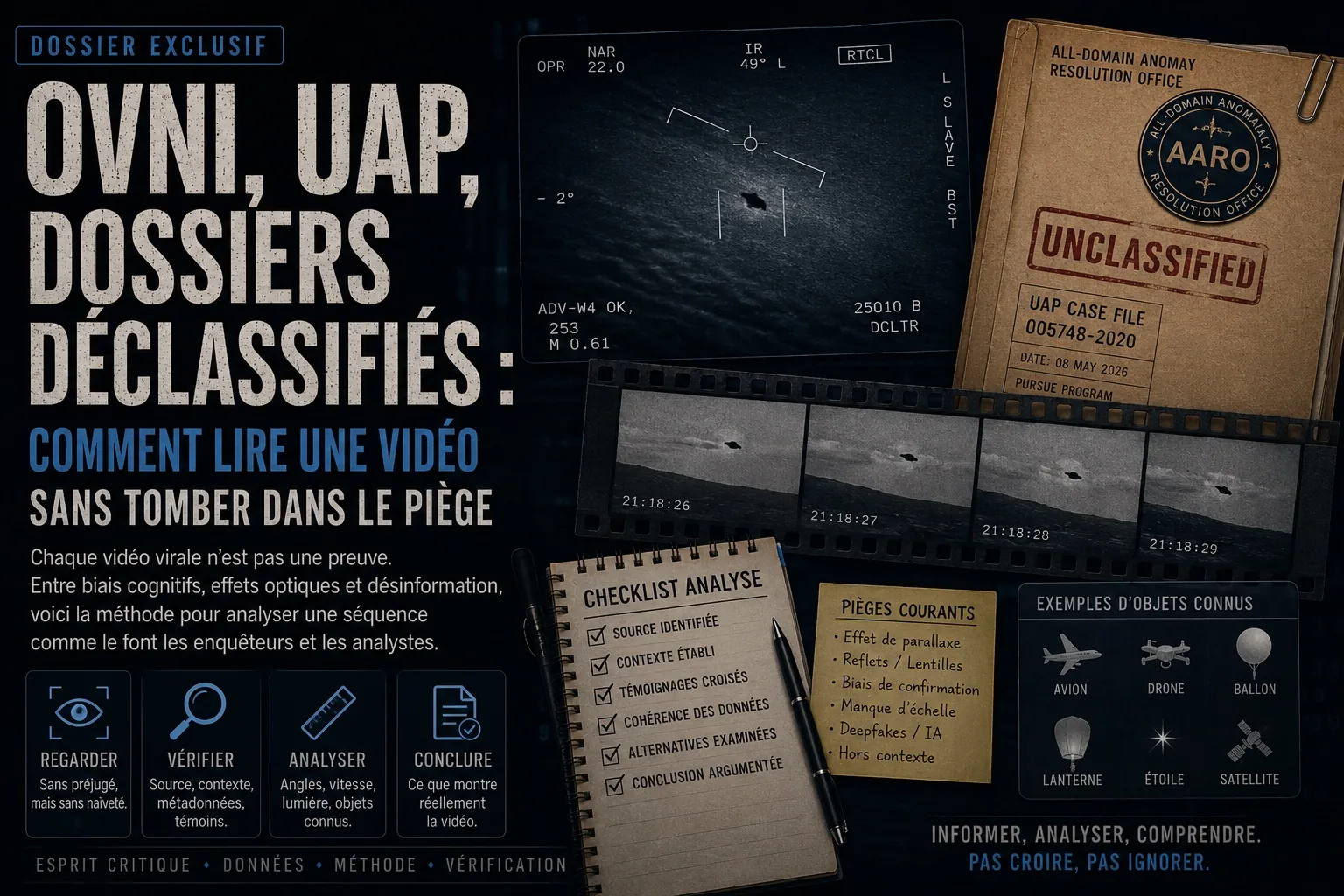
Why caution is a healthy reflex
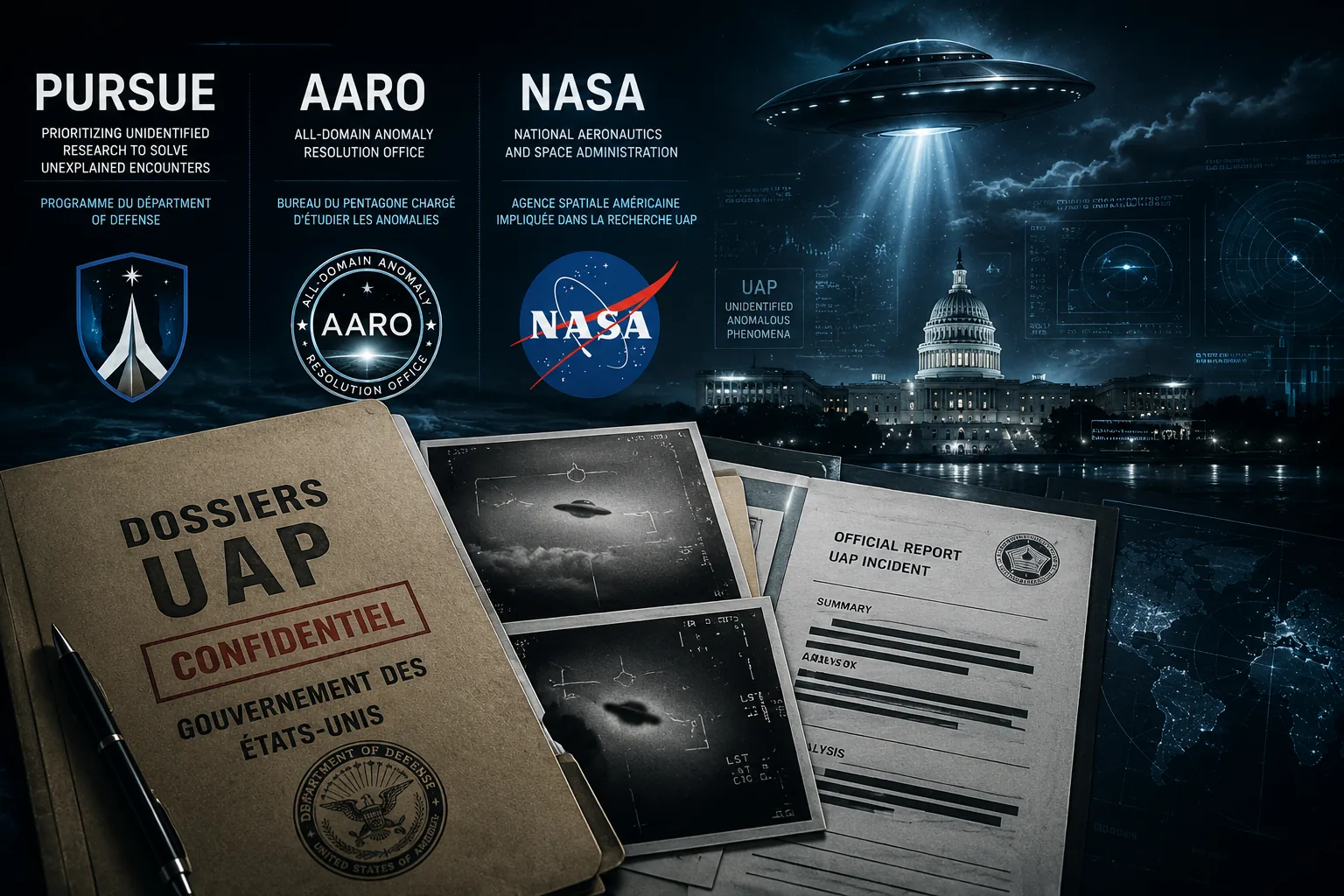
The term UFO refers to an aerial object that the observer has not been able to identify. That's all. He says nothing about his nature. The official American nomenclature now uses UAP, for Unidentified Anomalous Phenomena, to also cover underwater or transmedium phenomena. This precision matters: most of the reports processed by the AARO since 2022 find a conventional explanation — balloons, drones, orbital debris, sensor illusions. A minority remains without a satisfactory public explanation. It is this minority that warrants attention, not the other way around.
Good reflexes when watching a video
- Identify the original source. Who posted the video first? An official account, an identified media, an anonymous one? A reverse search on the keyframe often gives the answer.
- Check date and location. A sequence presented as new may be a recycled old fragment. The metadata, when they exist, and the details of the setting allow cross-checking.
- Look for an institutional source. Pentagon, AARO, NASA, US Navy, CNES / GEIPAN, congressional committees: is the video linked to an official file?
- Cross with another sensor. Radar, infrared, independent testimony, air traffic control: a single image is never enough.
- Read the comment with hindsight. A dramatic voiceover is not proof. A title in capital letters either.
- Distinguish the four levels. Verified fact, public statement, available image, hypothesis: do not mix categories.
Read a declassified file without getting lost
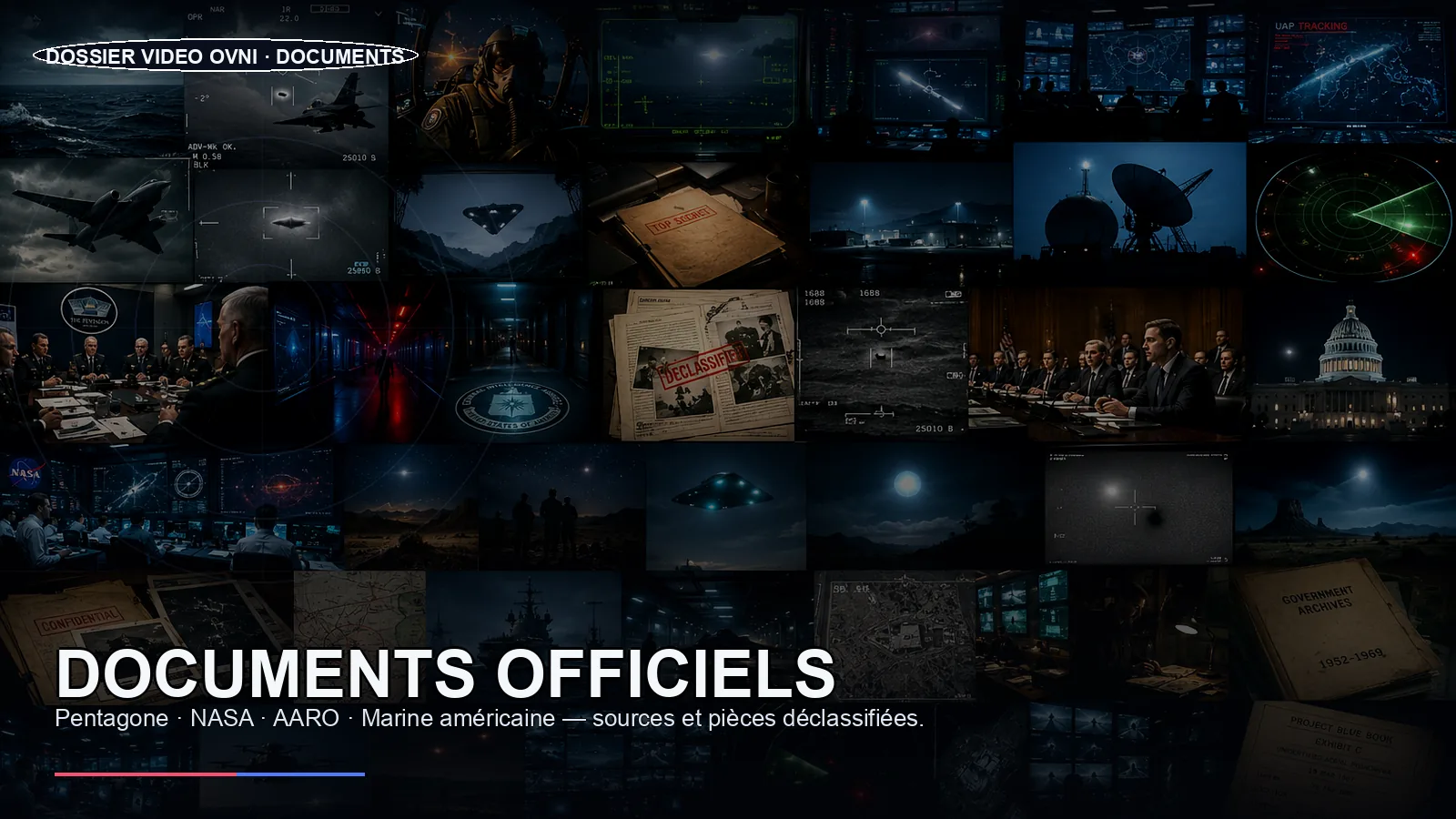
A declassified document is not necessarily spectacular. It is often technical, sometimes redacted, almost always careful in its formulations. Three practical tips. First, read the header: who produces the document, for which recipient, on what date. Then, identify the conclusions: what is affirmed, what is noted as unexplained, what is left open. Finally, compare the summary circulating on the networks with the original text. The differences are sometimes considerable.
The Pentagon archives, the public reports of the AARO, the independent NASA report of June 2023, the written reports of the congressional hearings, and the national archives – including in France via the GEIPAN – are accessible online. Going straight there remains the best antidote to rumor.
Three traps to avoid
The “it makes you think of” trap. A video that is reminiscent of another sequence is not the same sequence. Each case must be treated on its own merits.
The trap of no denial. When an authority does not comment, it does not constitute confirmation. Silence is not proof.
The trap of overbidding. The more a comment promises, the more it must show. Otherwise, it is opinion, not information.
What VIDEO OVNI is committed to doing
Our line is in one sentence: we separate verified facts, public statements, available images and hypotheses. No video is presented as evidence without an institutional source. No statement is treated as unrelated fact. No hypothesis is excluded, but none is elevated to the rank of conclusion without evidence.
See also
Track video analytics
To follow upcoming video analyses, join VIDEO OVNI on TikTok.
Follow VIDEO UFO on TikTok