12:30 a.m. — The first civilian reports
On the night of September 18-19, 1976, the Tehran control center received several calls from civilians reporting a luminous object in the sky north of the city. The general Yousefi, commander of the 4th Air Division of the Imperial Iranian Air Force, himself observed the object from the ground and described it as bright, larger than Venus.
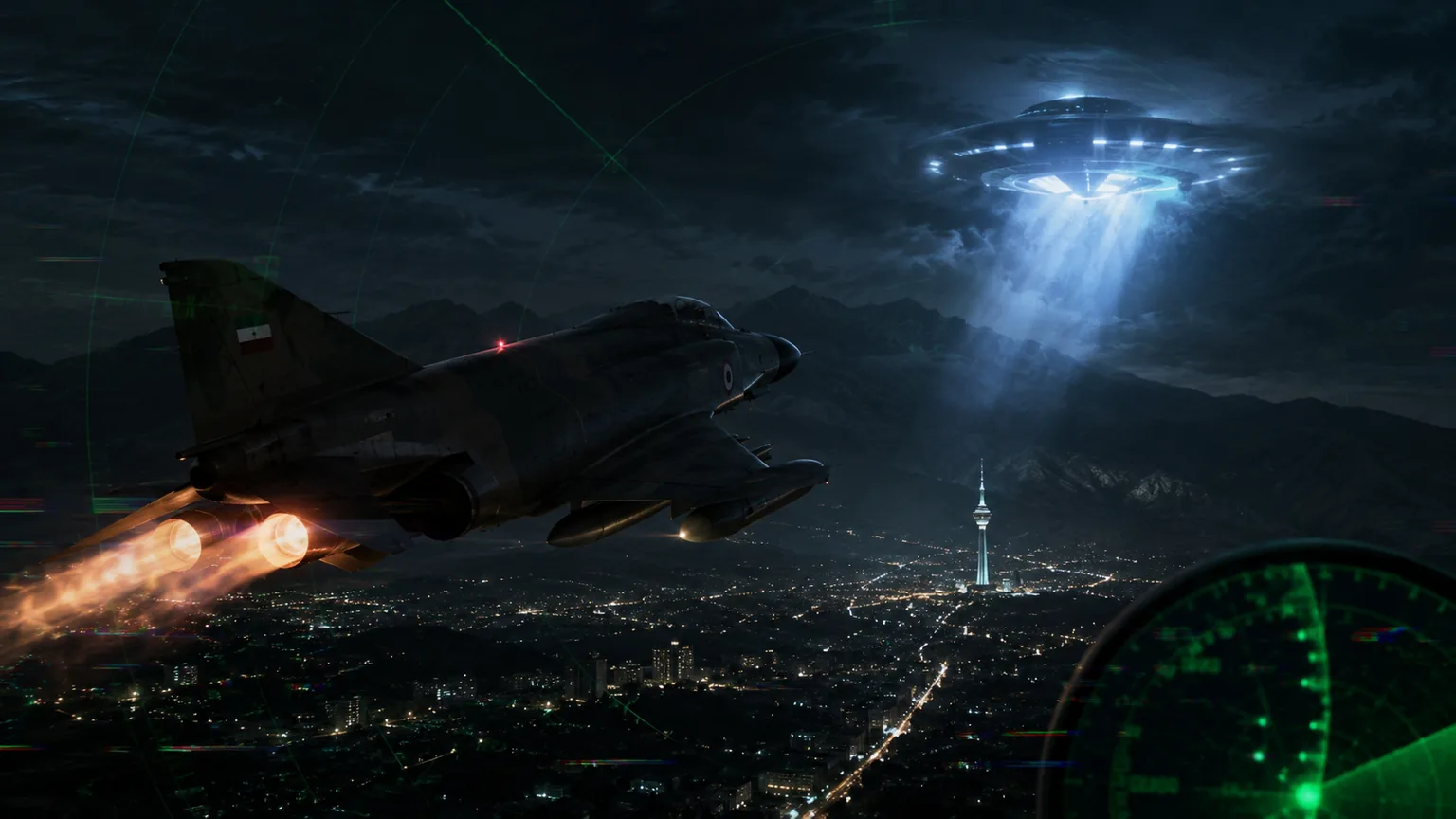
At 1:30 a.m., he ordered the takeoff of a first F-4 Phantom from Shahrokhi air base for identification.
F-4 No. 1 loses its instruments — F-4 No. 2 attempts to fire
At 1:40 a.m., the first F-4 approaches at 46 km. The pilot (Lieutenant Colonel Parviz Jafari at the controls of the second aircraft specifies in his subsequent declarations that the first pilot then lost its navigation instruments and communications and had to turn around. The object maintains its position.
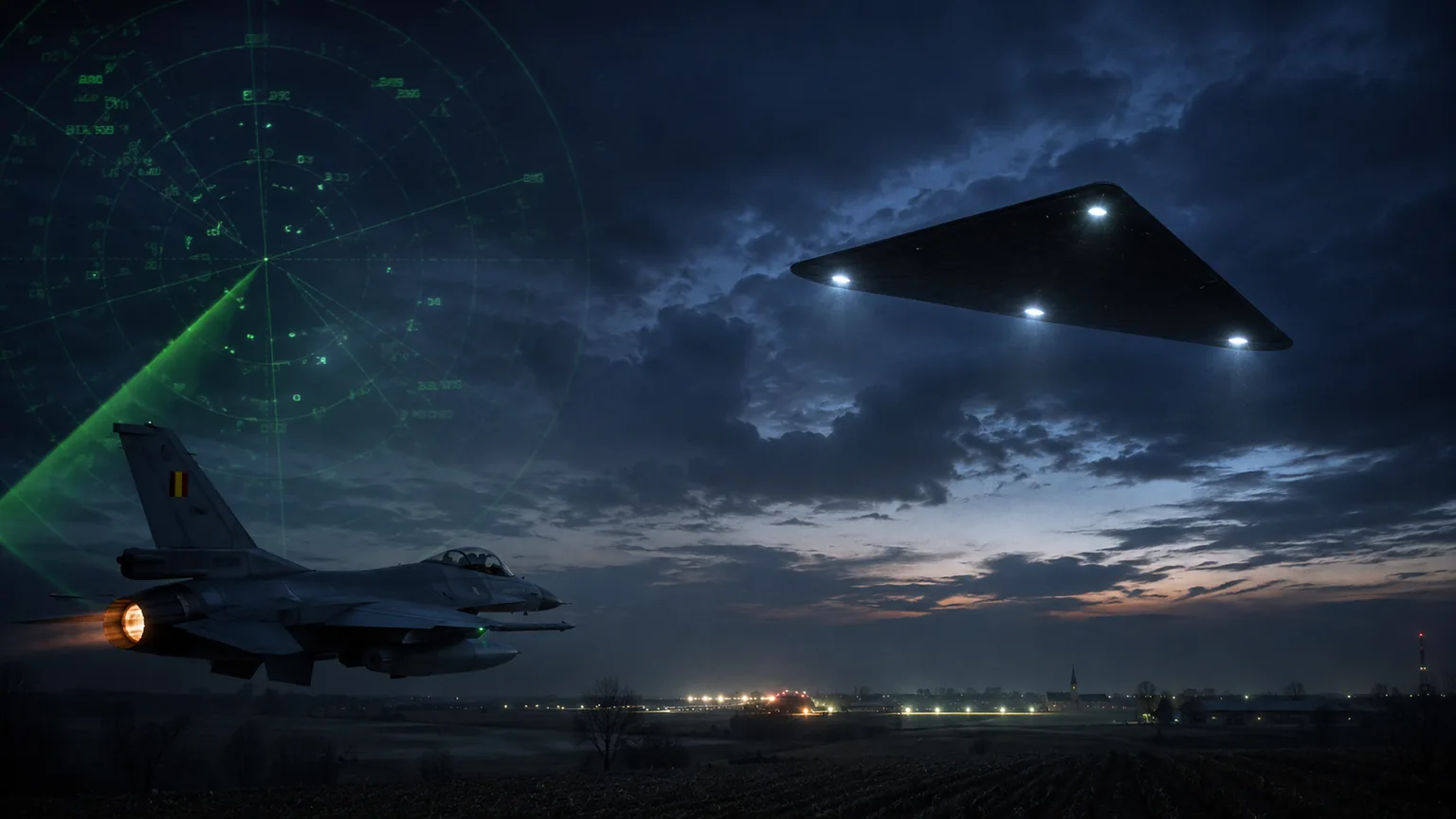
At 1:50 a.m., the second F-4 took off and made radar contact with the object 46 km north-northeast of Tehran. The pilot, the lieutenant Jafari, reports:
- The object has an intense brightness — difficult to look at directly.
- The radar contact shows a device the size of a Boeing 707.
- The object begins to accelerate — Jafari increases its speed to Mach 0.9 but cannot get any closer.
When Jafari attempts a radar lock to launch an AIM-9 Sidewinder missile:
✗ Simultaneous failure of weapon systems
When locking fire, entire Jafari dashboard turns off — weapons system, UHF communications and intercom. The failure ceases as soon as the F-4 moves away from the object. Jafari resumes communication and attempts a second lockout — same result.
The DIA report — declassified in 1978
The American Defense Intelligence Agency's report on the Tehran incident was declassified in 1978 and published by the National Security Archive. It is written by a US military attaché in Iran and forwarded to USAF headquarters, the NSA, the CIA and the White House.
Extract from the DIA report:
“A remarkable report. This case is a classic which brings together all the criteria necessary for a valid study of the UFO phenomenon: (a) The object was observed by multiple witnesses from different locations [...] (b) The object was tracked on radar [...] (c) Physiological effects were observed on the observers and electromagnetic effects on the equipment [...]"
Source document (EN): “An outstanding report. This case is a classic which meets all the necessary criteria for a valid study of the UFO phenomenon: (a) The object was seen by multiple witnesses from different locations [...] (b) The object was tracked on radar [...] (c) There were physiological effects on the observers and electromagnetic effects on the equipment [...]"
— Handwritten note on the DIA report, anonymous author (probably senior officer)
The report also documents that a subobject broke away from the main object, descended towards a point on the ground between Karaj and Tehran, glowed brightly, then re-entered the main object. Another sub-object would have followed Jafari's F-4 as it returned to Shahrokhi before leaving again.
Jafari speaks — National Press Club 2007
In 2007, General Parviz Jafari, now retired, testified to National Press Club in Washington DC:
“Whatever it was, it was able to jam all of my electronics at will — simultaneously. I was not able to fire. I was not able to communicate. And when I turned away from it, everything came back. »
— General (ret.) Parviz Jafari, National Press Club, Washington DC, 2007
✓ Why this case is exceptional
- Radar contact confirmed from the base and from both aircraft.
- Visual contact of several quality civilian and military witnesses.
- Repeated instrument failures, directly correlated to the proximity of the object.
- Documentary report from the American DIA considered by its own authors as a “classic case”.
- Pilot's testimony under oath 30 years later.
Sources and further reading
- DIA — declassified report on the Tehran incident, 1978 (National Security Archive) — https://nsarchive.gwu.edu/
- General (ret.) Parviz Jafari — testimony National Press Club, November 12, 2007
- Richard Hall — The UFO Evidence, Volume II, Scarecrow Press, 2001
- Leslie Kean — UFOs: Generals, Pilots and Government Officials Go On Record, Harmony Books, 2010
- NICAP — analysis of the Tehran incident — https://nicap.org/
- General Yousefi — statement to the Iranian press, September 1976