Why military pilot testimony carries weight
In the UAP file, the testimonies of military pilots have a special status. They are not simple "civilian observers": they are professionals trained to identify aircraft, accustomed to stressful situations and held to very strict reporting standards as part of their service.
A pilot who reports something unusual knows his testimony will be reviewed by his chain of command. He takes a real institutional risk. This is why pilots who have spoken publicly have mostly done so after leaving active duty.
David Fravor — USS Nimitz, November 14, 2004
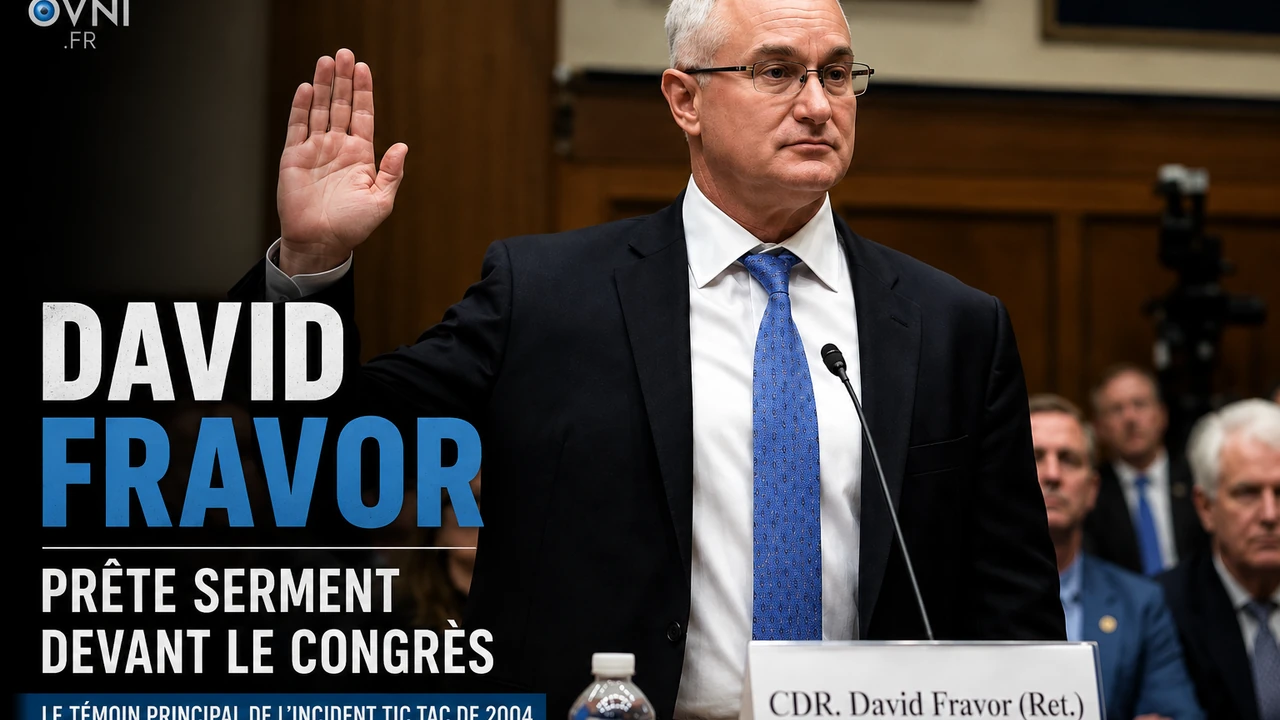
Commander David Fravor (retired, 22 years in the Navy, VFA-41 Black Aces) is the pilot whose testimony on the Nimitz incident has the most institutional impact. He testified under oath before the House of Representatives on July 26, 2023.
What he described under oath:
- A white, oblong object, approximately 12 to 14 meters, with no wings or visible propulsion trail.
- The object made a mirror movement in front of his F/A-18 — as if responding to his presence.
- After an attempted interception, the object accelerated sharply and disappeared toward a point about 100 km away.
- He called the object "the most technologically advanced threat" he had ever encountered.
What this testimony does not affirm: Fravor never said under oath that the object was of extraterrestrial origin. He said he didn't know what it was, and it was beyond anything he knew.
Ryan Graves — F/A-18 pilot, recurring reports
Ryan Graves, former F/A-18 pilot (VA Beach, Virginia), testified to the same committee on July 26, 2023. His statement is different from that of Fravor: it concerns not a single incident but reports recurring.
- Graves said he observed UAP objects repeatedly in U.S. training airspace off the East Coast.
- He founded Americans for Safe Aerospace, an organization of pilots and military personnel who report UAP incidents in a secure setting.
- His main statement: Underreporting is systemic — pilots are reluctant to report incidents for fear of professional stigma.
→ The change in Navy 2019 procedure
In 2019, the U.S. Navy officially updated its UAP reporting procedures to encourage incident reporting without disciplinary consequences for pilots. This change is directly linked to pressure from Graves and other drivers.
Alex Dietrich — Nimitz incident 2004, Fravor's teammate
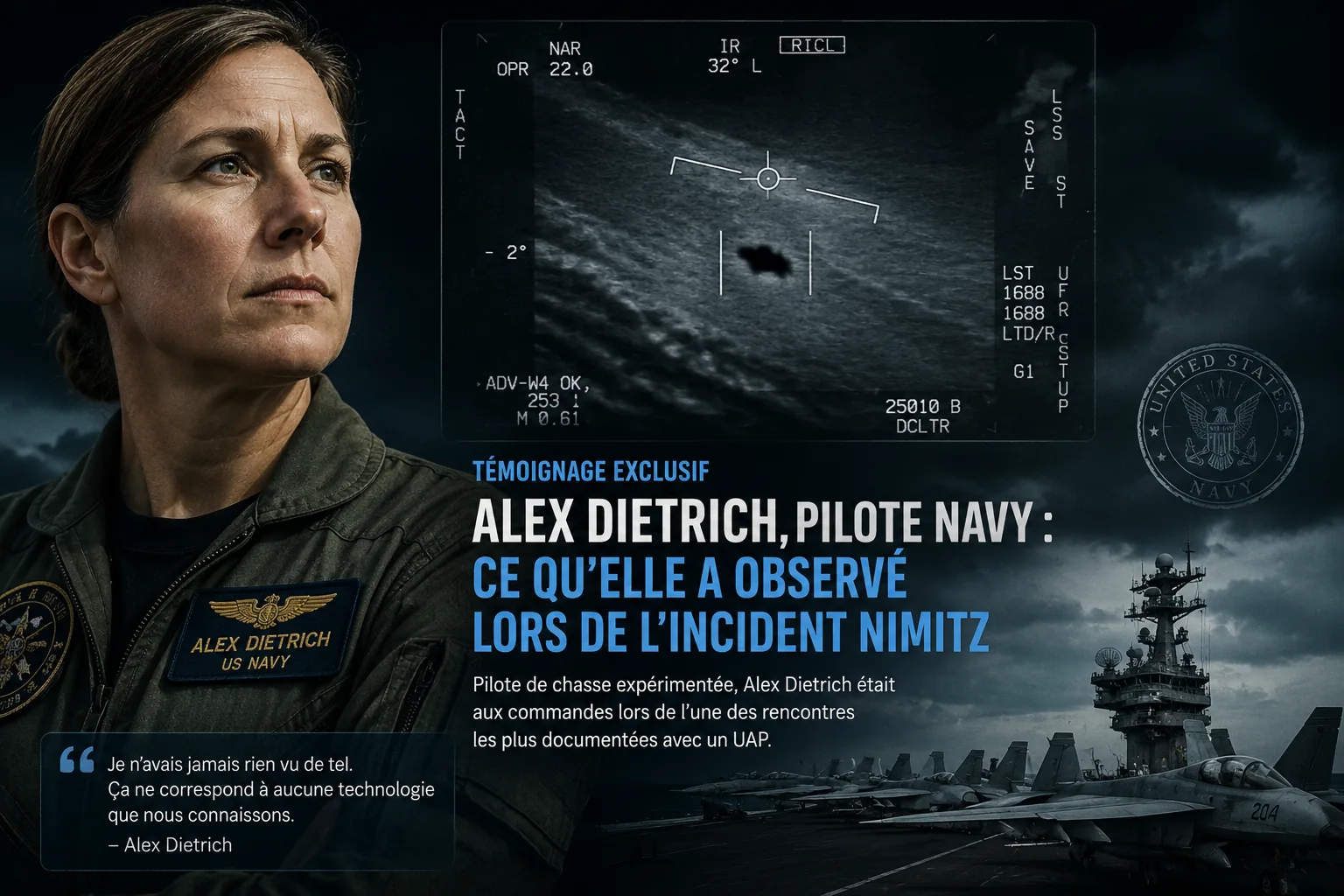
Lieutenant Commander Alex Dietrich was Fravor's crewmate on November 14, 2004. Unlike Fravor, she did not speak publicly until May 2021, during the broadcast 60 Minutes from CBS. Her testimony confirms the main elements of Fravor's (shape of the object, absence of visible propulsion, atypical behavior) from a different angle of observation - she maintained altitude while Fravor descended towards the object.
Dietrich has not joined any UAP activist movement and his public statements remain sober and precise. She said she didn't know what the object was.
David Grusch — between statement and proof
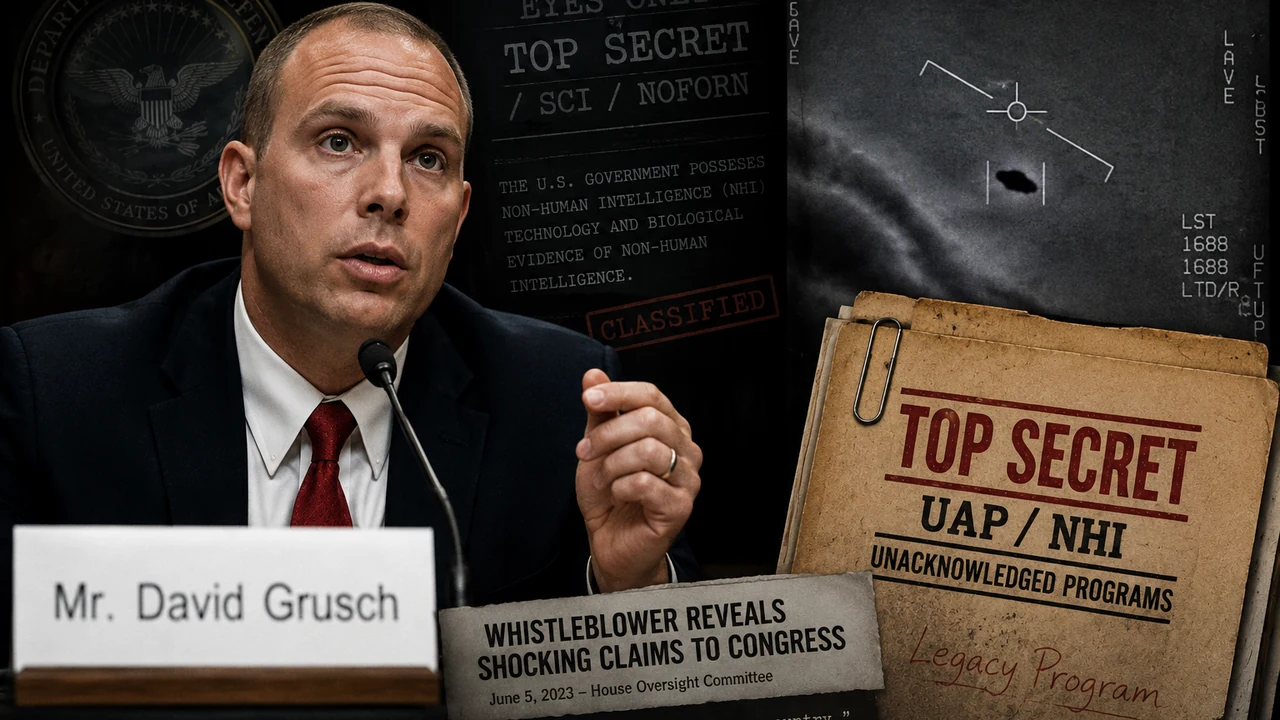
David Grusch, a former intelligence officer, testified at the same hearing on July 26, 2023. His statement is different in nature: he affirms the existence of secret government programs linked to "non-human materials", and says he was personally excluded from them.
What Grusch said : he says he was informed of the existence of these programs and reported this information to the inspector general of Congress. He claims retaliation against him after these reports.
What Grusch did not provide : no document, no physical evidence, no specific program identification was made public during this hearing. His claims are based on second or third hands that he cannot cite publicly for classification reasons.
⚠ Critical distinction
- Fravor, Graves, Dietrich: testify to what they have directly observed. Their statements are corroborated by radar and infrared data.
- Grusch: testifies to what he says he has learned from classified sources. His assertions are serious in the institutional sense (report to the IG of Congress) but not publicly verifiable at this stage.
What Pilot Testimonies Collectively Establish
✓ What is established by pilot testimonies
- Qualified pilots, under professional flight conditions, have observed objects that they could not identify with their technical references.
- These observations coincide with independent radar data in the best documented cases (Nimitz 2004).
- Underreporting is a structural problem officially recognized since 2019 by the Navy.
- The 2023 hearings have formally changed the status of the subject: it has left the realm of institutional taboo.
UFO VIDEO editorial rule: the credibility of a witness is not proof of what he claims to have seen. It increases the value of the testimony, it does not transform it into physical proof of the origin of the phenomenon.
Sources used
- US House of Representatives — Oversight Committee — UAP public hearing, July 26, 2023. Sworn testimony from David Fravor, Ryan Graves and David Grusch. Transcript available via congress.gov.
- CBS 60 Minutes — “UFOs regularly spotted by US Navy pilots”, May 16, 2021. Interview with Alex Dietrich and David Fravor.
- New York Times — December 16, 2017: revelation of the Nimitz incident and the AATIP program. First public publication of Fravor's testimony.
- Americans for Safe Aerospace — Organization founded by Ryan Graves to collect reports from pilots. americansforsafeaerospace.org.
- Pentagon — Updated UAP Navy reporting procedures, 2019. Announced via Navy spokesperson Joseph Gradisher.
- AARO Annual Report FY2024 — Current institutional framework for receiving military testimonies and reports.