In short: what is GoFast video?
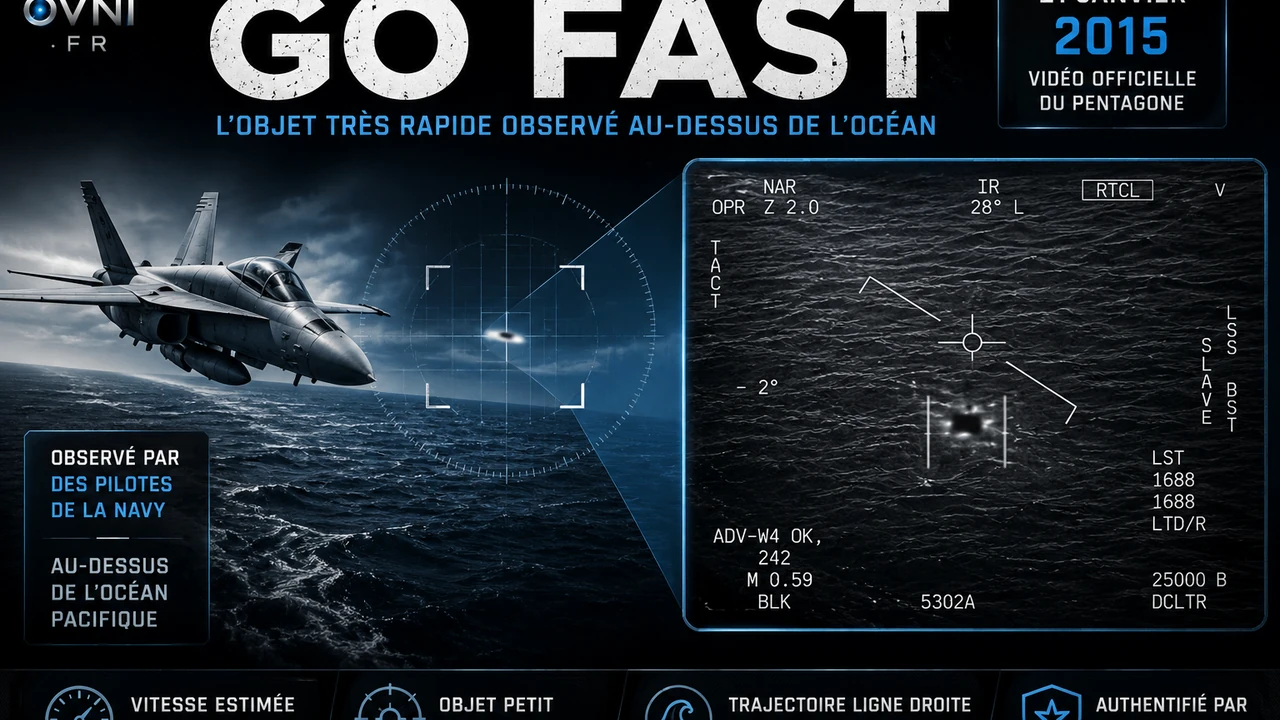
The GoFast video is approximately 35 seconds of infrared footage filmed by the ATFLIR camera of a Navy F/A-18 in 2015. It shows a small object moving at low altitude over the Atlantic Ocean at an apparent high speed. The name "GoFast" is a spontaneous comment from one of the pilots in the audio of the video.
What exactly the GoFast video shows
The ATFLIR sequence shows:
- A small object, very luminous in infrared (hot thermal signature), moving at high apparent speed above the water surface.
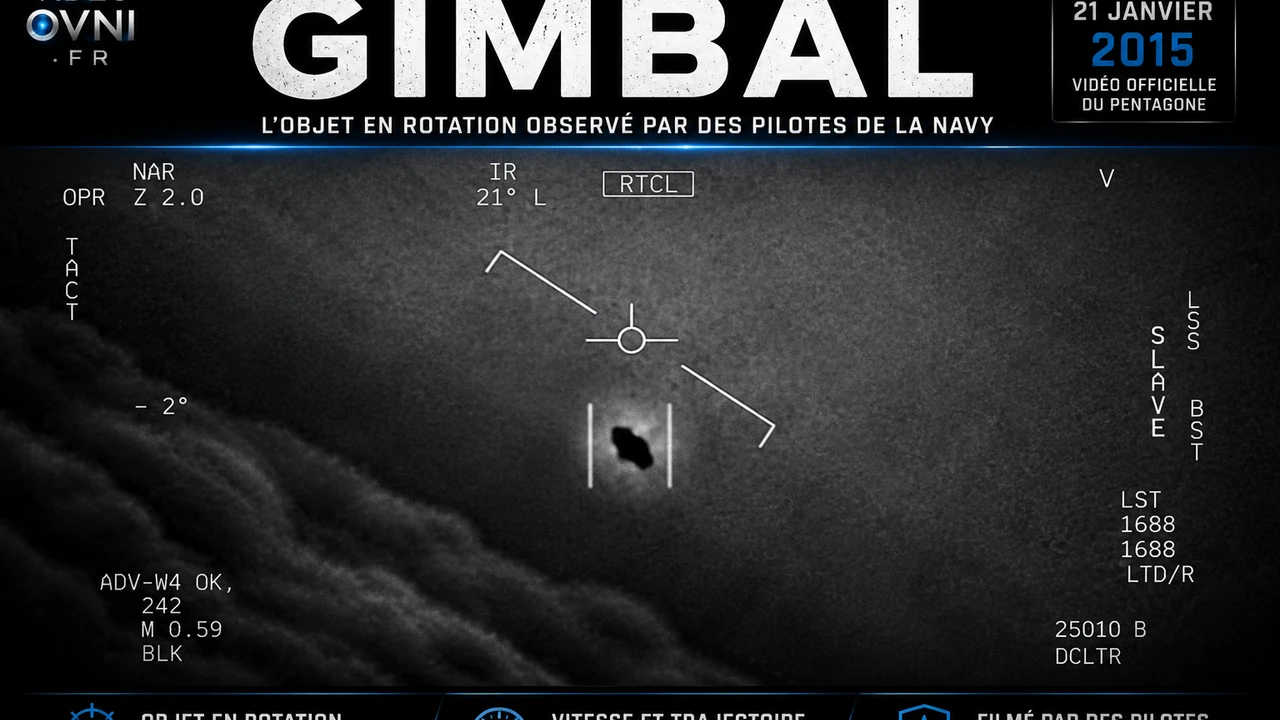
- The object is filmed from an altitude of approximately 25,000 feet. The ATFLIR camera follows the rotating object (gimbal), which visually accentuates the perceived speed.
- In the audio, a pilot is heard exclaiming: “Whoa, got it!” Whoa, it's going against the wind! The wind's 120 knots to the west! » (It's going against the wind! The wind is blowing at 120 knots to the west!)
- The object produces no visible trail, neither thermal nor condensation.
- The video ends before the object leaves the camera's view.
The question of real speed
The apparent speed of the object in the GoFast video is striking. But several independent analyzes have shown that it is partly misleading, due to the ATFLIR camera parallax.
⚠ The parallax effect: a crucial point
When a plane is moving at high speed while filming a low-altitude object with a high-zoom camera, rotating the camera to keep the object in frame creates a very high apparent speed — even if the actual object is moving slowly. Analyzes published by Mick West (Metabunk) and other physicists have calculated that the actual speed of the GoFast object could be on the order of 40 to 70 knots (~75 to 130 km/h) — not several thousand km/h as some media have claimed.
This speed of 40–70 knots, if correct, would be compatible with certain conventional objects (drones, drifting aerostats). However:
- The pilot indicates that the object is moving "upwind at 120 knots" — which, if correct, is incompatible with a passive object.
- Complete weather data from the incident is not publicly available to validate this claim.
- The absence of trail, the shape and the infrared signature remain unexplained by the conventional hypotheses currently available.
✓ What technical analyzes establish
- The very high apparent speed observed visually is largely due to the parallax effect of the ATFLIR camera.
- The real speed of the object is significantly lower than the apparent speed — its order of magnitude is debated but much lower than the extreme figures sometimes cited.
- These findings do not resolve the question of what the object is — they correct a common misinterpretation of the video.
What is confirmed by the Pentagon
✓ Officially established
- The Department of Defense confirmed on April 27, 2020 that the GoFast video is an authentic recording of US Navy pilots.
- The object filmed has not been identified to date.
- The Navy classifies this incident as one of the actual UAP sightings that have been the subject of official reports.
✗ Not officially confirmed
- The object's actual speed has not been officially released by the DoD.
- The origin – drone, aerostat, natural phenomenon, adverse technology or other – remains unidentified.
- No official statement speaks of non-human or extraterrestrial technology.
Common interpretation errors
- “The object is moving at several thousand km/h. » — The apparent speed is deceptive. Calculations based on parallax and altitude give a much lower actual speed. The “thousands of km/h” claim is not established.
- “The Pentagon has declassified the video. » — The video was not classified. The Pentagon has it authenticated after its unofficial release in 2017.
- “This is clearly alien technology. » — Not established. The object is unidentified — which is different from non-human.
- “The video proves that it goes against the wind. » — The video doesn't prove it. It is a verbal statement from the pilot, the validity of which depends on actual weather data from the incident — not publicly available.
Official sources and documents
- Department of Defense — press release dated April 27, 2020 authenticating GoFast, Gimbal and FLIR1. defense.gov
- Mick West / Metabunk — analysis of real GoFast object speed via ATFLIR parallax. metabunk.org
- US Congress — Ryan Graves sworn hearing (background of Navy 2015 observations), July 2023.
- To The Stars Academy — original video release, 2017.
- The New York Times — Glowing Auras and 'Black Money', December 2017.
- AARO—Navy reporting data, annual reports 2022–2024. aaro.mil